
Every backyard mechanic and seasoned technician has faced the same frustrating roadblock: you pull a worn-out component from an engine bay, read the stamped code, and discover the original dealership charges an arm and a leg for a replacement. Even worse, the dealer might tell you that the part is backordered for weeks. This is where mastering the part number cross reference Napa process becomes a genuine lifesaver for your vehicle and your wallet.
Automotive parts interchange is not just about finding something that physically bolts onto a bracket. It is about matching flow rates, thread pitches, voltage tolerances, and structural integrity without paying dealership markups. Knowing how to translate complicated manufacturer stamps into readily available aftermarket components keeps your vehicle on the road instead of stuck on jack stands.

napa industrial filters online cross reference autos post from part number cross reference napa
Why Part Number Cross Reference Napa Matters for Everyday Drivers
Original Equipment Manufacturer (OEM) parts come with dedicated factory codes assigned by brands like Ford, General Motors, or Toyota. While these numbers ensure traceability at assembly plants, independent parts retailers catalog components differently. Utilizing a part number cross reference Napa method bridges the gap between proprietary factory numbering and mass-market inventory.
Automakers rarely manufacture every single component in-house. Companies like Bosch, Denso, Gates, and Dana supply original assemblies straight to assembly lines. When you purchase the same item under an aftermarket label through NAPA, you are frequently getting identical engineering under a different box design. Finding the cross reference match means getting professional-grade reliability while cutting out the dealer premium.
Beyond direct cost savings, parts availability plays a massive role. If your daily driver blows an alternator on a Friday afternoon, waiting five business days for a specialized factory part ruins your schedule. Crossing that factory code to a locally stocked equivalent lets you complete the repair before the weekend ends.
How to Find Your Equivalent Code Accurately
Running a cross reference search requires clean data from the beginning. Entering an incomplete or mistyped sequence will lead to incorrect components that risk damaging your drivetrain or electrical harness.
Start by wiping grease and road dirt off the old housing. Look for permanent identifiers such as laser-etched stamps, raised metal castings, or durable foil stickers. OEM codes typically feature a mix of letters and numbers separated by dashes, while production batch numbers are often smaller and set off to the side. Disregard internal mold marks and focus solely on the primary part identifier.
Once you have the code, head over to the digital catalog search or hand the number to a counter specialist at your local store. The cross-referencing system scans its internal interchange database to identify matching specifications. If the exact code does not trigger an immediate result, try stripping away prefix letters or dashes, as database indexing often categorizes parts by their core numeric sequences.

fuel filter cross reference chart john deere d110 oil from part number cross reference napa
drive belt cross reference from part number cross reference napa
Critical Specs to Check Before Installing an Interchange Part
Never assume an interchangeable part is ready to drop in simply because a database flagged a match. Always perform a physical side-by-side verification on your workbench before breaking out the torque wrench.
Mounting points and bracket orientation: Lay the old and new parts side by side to ensure bolt holes align without forcing or bending mounting tabs.
Connector pinouts and terminal polarity: For sensors, alternators, and starter motors, inspect the plastic harness plug closely. The pin count, locking tabs, and internal spacing must mirror the original design to prevent electrical shorts.
Thread pitch and diameter: Thread bolts by hand for the first few turns to ensure smooth engagement. Forcing a mismatched thread destroys expensive aluminum blocks and steering knuckles.
Fluid port sizing: On power steering pumps, brake calipers, and master cylinders, confirm that banjo bolt threads and flare fittings seal flush without weeping fluid under pressure.

v belt cross reference car interior design from part number cross reference napa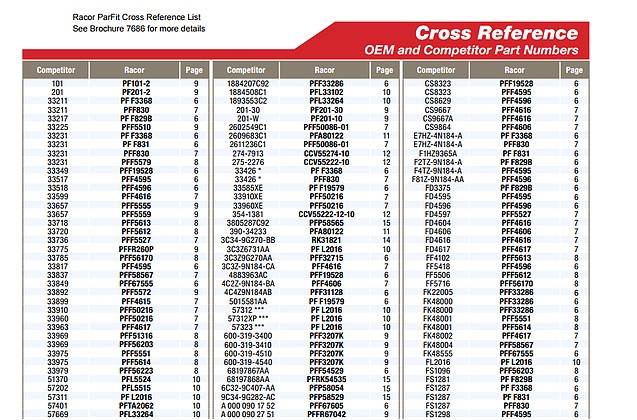
fram oil filter conversion chart oil filter comparison from part number cross reference napa
Troubleshooting Stubborn and Obsolete Part Numbers
Working on older trucks, imported platforms, or discontinued trim packages often leads to dead ends during a direct search. When a standard interchange query comes back empty, alternative strategies help track down the right assembly.
First, check for superseded part numbers. Manufacturers constantly update component revisions to fix known engineering flaws, retiring older numbers in the process. Searching dealership parts bulletins reveals whether an updated factory code replaced your stamped sequence. That newer number frequently unlocks an immediate aftermarket match.
Second, search by assembly components rather than the entire unit. Rebuilding a component using replacement bearings, seals, or brushes often proves faster than hunting down an elusive, complete assembly that went out of production years ago.
Taking a few methodical minutes to verify dimensions and double-check your initial stamps guarantees you get the right fit the first time, saving hours of unnecessary garage headaches.


